 Skip-the-line available
 Timed Entry at the Biblioteca Joanina: The Rules, Explained
How the 20-minute slots actually work, why you cannot linger, the no-photography rule on the noble floor, and what the circuit ticket covers beyond the library.
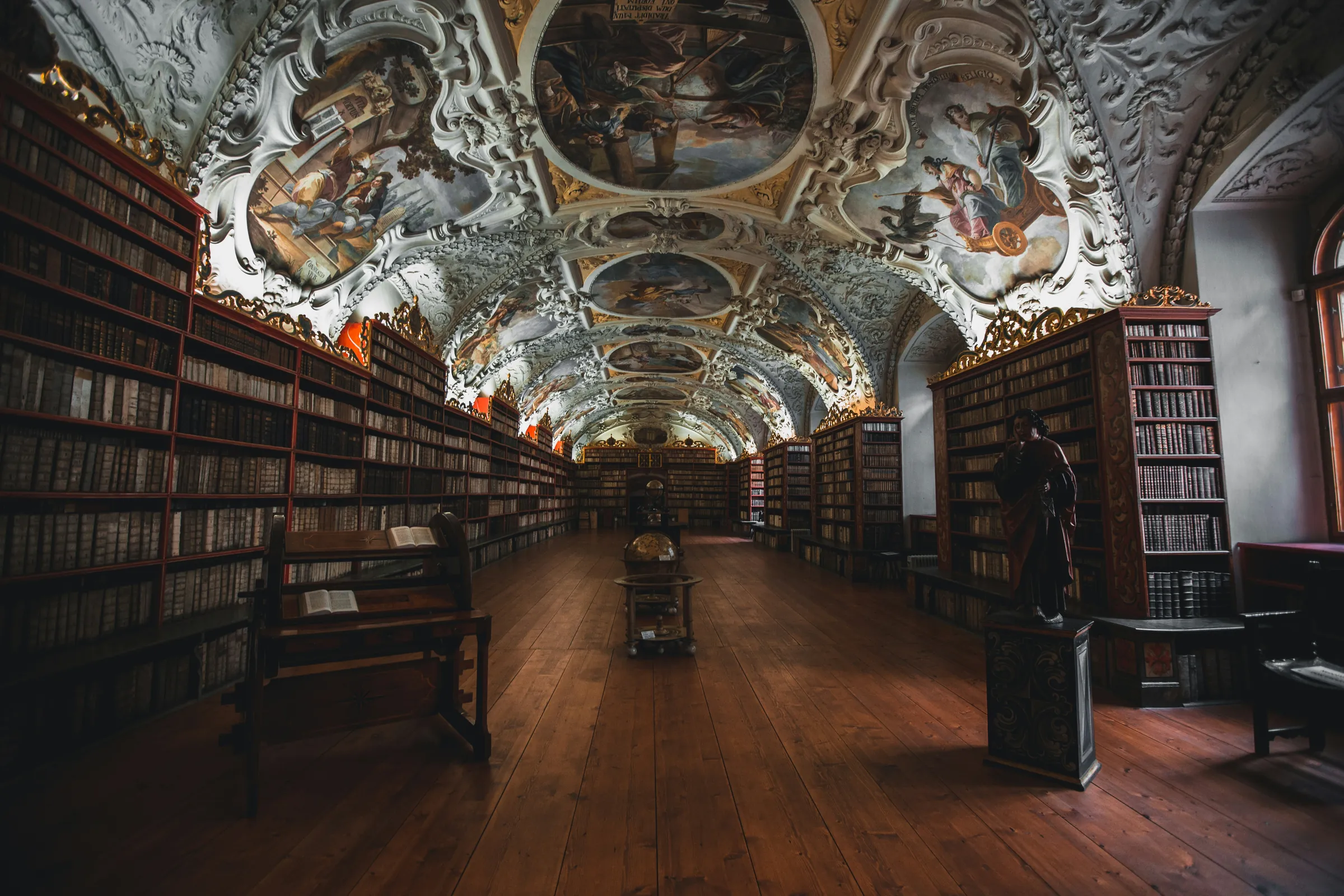
The Biblioteca Joanina is one of the most tightly managed interiors in Europe, and it earns every rule. Entry is by timed slot only, in small groups, as part of the University of Coimbra's visitor circuits; your time inside is short and enforced; and on the noble floor — the gilded triple hall everyone comes for — photography is prohibited outright. None of this is bureaucratic whim. The library is a sealed conservation vault holding tens of thousands of rare books, and every rule that frustrates a visitor exists to keep the room's climate, silence and fabric intact for the next three centuries. But rules land differently when you understand them, and a visit planned around them is a far better visit than one that collides with them. This guide walks through the mechanics — the slots, the clock, the camera ban, the fine print about children and stairs — and what the wider circuit ticket gives you across the Paço das Escolas once your twenty minutes of gold are over.
How the timed slots actually work
First principle: there is no library-only ticket. The Biblioteca Joanina is visited as part of the University of Coimbra's combined circuits, which pair the library with the Royal Palace, St Michael's Chapel and the university's historic museum spaces. Within that ticket, the library is the one timed element — entry runs in short slots of about twenty minutes for small groups, and the date and time attached to your ticket are your library entry time, not a general admission window. Everything else on the circuit flexes; the library slot does not.
The mechanics on the day are simple once you know them. You arrive at the Paço das Escolas, the monumental courtyard at the top of Coimbra's Alta; at your appointed time you join your small group at the library entrance; the door is opened, the group admitted, and the door closed behind you — the famous teak seal that keeps the interior's climate stable. You descend through or exit from the visit route as directed, and the next group follows on schedule. It is closer to boarding a flight than wandering a museum, and the comparison is worth taking seriously when you plan your margins.
The timing discipline runs to the end of the day as well. At the time of writing, the university's visitor pages list the Palace of Schools complex as open daily from 9:00 to 19:30, with last admission at 19:15 and the last entry to the Joanina itself at 19:00 — and hours can shift seasonally, so treat the pattern rather than the digits as the lesson: the library stops admitting before the complex closes. Booking ahead matters for the same reason it matters at any capacity-limited monument: each slot holds only a small group, the day holds only so many slots, and in high season the desirable times are taken long before the day itself.
Why you cannot linger — the 20 minutes, defended
The short visit is the rule visitors resent most and the one with the best reasons behind it. The Joanina survives because it is, functionally, a sealed vault: exterior walls about 2.11 metres thick and a teak door hold the interior at a near-constant 18–20°C and roughly 60% humidity — the conditions under which paper, leather and glue age slowest. Every person who enters carries heat and moisture into that balance, and every minute the door stands open bleeds the stable air the walls exist to trap. Small groups, admitted briefly and cycled briskly, are how the university lets hundreds of people a day into a room engineered to admit almost nobody.
Twenty minutes is also, honestly, a workable audience with the room — if you spend it deliberately. Our suggested allocation: give the first minutes to the long axis, the single most composed view in the building, looking down the enfilade of three halls to Domenico Duprà's portrait of João V; then work one hall properly rather than all three thinly — the carved and gilded case-work, the ornament against its black, red or green ground, the tables of tropical wood, the ceilings painted to draw the eye upward. Resist narrating; the room rewards attention, not commentary. Visitors who try to see everything see nothing in particular.
What you should not do is engineer extra time. Lingering past your group, doubling back against the flow, or planting yourself in a doorway holds the door cycle open and achieves little except a polite but firm escort onward — staff here manage the clock because the clock is conservation policy. If twenty minutes genuinely feels insufficient, the honest solutions are a return visit on another slot or the university's occasional evening and guided programmes, which move at a different rhythm. The standard visit is short by design, and the design is why there is still something to visit.
The photography rule — and what to do about it
The rule is blunter than most visitors expect: on the noble floor of the Joanina — the gilded triple hall itself — photography and filming are prohibited, full stop. This is not a no-flash policy with a wink; the university's visitor information states the prohibition outright, and staff enforce it. Across the rest of the visiting spaces the regime is lighter but real: flash photography is banned everywhere, and tripods and selfie sticks are banned throughout the visitor areas. The strictest rule guards the most fragile room, which is exactly how it should run.
The reasons are the usual conservation suspects, amplified by the room's nature. Flash light stresses pigments, varnishes and three-century-old bindings; camera traffic slows groups and jams the tight visitor flow the timed system depends on; and a room experienced through fifty raised phones is a worse room for everyone in it. The Joanina has chosen, deliberately, to be one of the places you look at rather than shoot — a category that has grown rarer and, many visitors find, more valuable. The memory of the long gilded axis is stronger for having been made with eyes rather than a lens.
Practically: photograph the rest of the visit instead. The Paço das Escolas courtyard, the views over the Mondego, the chapel's azulejos and organ, the palace halls — all photogenic, all permitted within the flash and tripod rules, and all better subjects than a hurried, dim, contraband frame of the library would have been. If you want images of the noble floor, the university's own publications and licensed photography exist precisely because general visitors cannot shoot there. Put the phone away before the teak door, and take the twenty minutes as they were designed to be taken.
What the circuit ticket includes beyond the library
Your ticket is a pass to the monumental university, not just its most famous room. The main circuits pair the Joanina with the Royal Palace — including the Sala dos Capelos, the great ceremonial hall hung with portraits of Portugal's kings — and St Michael's Chapel, with its celebrated baroque organ of nearly 2,000 pipes. The fuller circuit adds the university's science museum spaces: the 18th-century chemistry laboratory, the academic museum, the cabinet of curiosities and the mineral gallery. The library takes twenty minutes; the ticket comfortably fills a half day.
The structural point to grasp is which parts are timed and which are free-flowing. Only the library runs on a slot. The palace, chapel and museum spaces admit you flexibly within opening hours, and the university notes that the non-guided ticket's spaces remain valid across two days — a genuinely useful provision that lets you split the visit, take the library and courtyard on day one and return for the rest, or simply re-walk a favourite space the next morning. One caution from the practical file: on Sundays the chapel closes to visitors from late morning into early afternoon for mass, so route around the service if the organ matters to you.
Plan the day as an orbit around the fixed point. Book the library slot first — it is the scarce element — then let everything else arrange itself before and after it. A morning slot means arriving fresh for the headline room, then unhurried hours in the palace and museums; an afternoon slot means working the untimed spaces first and arriving at the teak door with the day's crowds thinning. Both work. What does not work is treating the whole complex as walk-up and hoping the library fits in — that is the single most common way visitors end up standing in the courtyard, ticketless, looking at a door.
Children, stairs and the fine print
Families are welcome, with rules worth knowing in advance. The university requires that visitors under 18 be accompanied by an adult throughout the visiting spaces. Young children can visit the library, and when you book, children under six must be included in the same booking as the adults they are visiting with — do not plan to sort a small child's entry out separately or at the door. Since every member of your party occupies a place in a small timed group, book the full party together from the start; it is also the only way to guarantee you all share one slot.
The site is physically demanding, and honesty here saves disappointment. The university sits at the top of a steep hill, reached by climbing whichever way you approach; the historic interiors are floored in stone and reached by stairs; and the university's own information is frank that the Royal Palace is not wheelchair accessible and that wheelchair access in the Joanina is restricted. The university tower is admired from the courtyard — at the time of writing the visitor pages list it as closed to general visits, with tower access appearing only in occasional evening programmes. Visitors with limited mobility can still have a rich visit, but it takes planning; contact us before booking and we will confirm the current arrangements for the spaces that matter to you.
Finally, the small logistics that smooth the day. The ticket office sits on Rua Larga within the university complex, open daily through the main season from morning to evening. Arrive at the top of the hill with a margin of twenty to thirty minutes before your library time — the complex takes a few minutes to navigate on a first visit, and the courtyard views have a way of consuming schedule. Travel light: large bags sit awkwardly with tight group flows and historic floors. And carry water for the climb, not for the library — the noble floor is no place for an open bottle, and your twenty minutes will be over before thirst is.
Frequently asked
How long do you get inside the Biblioteca Joanina?
Entry runs in timed slots of about twenty minutes for small groups, and the time on your ticket is your library entry time. In practice, expect ten to twenty minutes on the noble floor depending on the day's flow — short by design, because the sealed room's climate protects the books.
Can I take photos inside the library?
No. Photography and filming are prohibited on the noble floor of the Joanina, and flash photography, tripods and selfie sticks are banned across the visiting spaces. Photograph the courtyard, palace and chapel instead.
Is there a library-only ticket?
No — the Joanina is visited as part of the University of Coimbra's combined circuits, which also cover the Royal Palace, St Michael's Chapel and, on the fuller circuit, the university's science museum spaces. The library is the only timed element.
What happens if I'm late for my slot?
Slots are enforced — the groups are small and the schedule tight, so treat your library time like a departure time. Arrive at the top of the hill with twenty to thirty minutes in hand; the climb and finding the entrance take longer than first-time visitors expect.
Do small children need to be on the booking?
Yes — children under six must be included in the same booking as the adults they visit with, and all visitors under 18 must be accompanied by an adult. Book the whole party together so everyone shares the same timed slot.
Is the ticket valid for one day only?
The library slot is fixed to its date and time, but the university notes that the non-guided ticket's other spaces are valid across two days — so you can split the palace, chapel and museums over a second day if you wish.